World Tourism Day falls on 27 September every year, and in 2026 that is a Sunday. The official host is El Salvador, and the theme is Digital Agenda and Artificial Intelligence to Redesign Tourism, with the programme built around smart destinations, digital identity and payments, data-driven sustainability, and getting small tourism businesses online. It is, in short, a day about logistics: how a traveller finds a place, books it, pays for it and moves through it.
That is worth taking seriously. Logistics is where most trips actually fail, and an itinerary engine that knows the Konkan railway timetable better than you do is a genuine improvement on a group chat and a guess. But there is a second half of travel that no booking system touches, which is the question of what you already know about a place on the morning you arrive. Two people can get off the same train at Varanasi with identical bookings and have completely different weeks, and the difference is almost entirely what each of them read first.
World Tourism Day 2026, in one place
What the AI does well, and exactly where it stops
An AI trip planner is very good at the reversible parts of travel. Routes, prices, opening hours, visa paperwork, the fastest way from Kochi to Alleppey on a Tuesday. These are questions with correct answers, and a system that has read every timetable will beat you at them. What it cannot do is give you the thing that makes a place legible once you are standing in it: the argument a city has been having with itself for two hundred years, the reason a particular food is eaten at a particular hour, why the person behind the counter is being formal with you.
Novelists and travel writers have been doing that work for a long time, and they do it in a form that survives a patchy network. What follows is a reading list organised the way a trip actually runs: what to read before you leave, what to carry on the move, and what to read when the trip is not happening at all.
Before you go: books that give a place a prior
India, and the short trip you can actually take this year
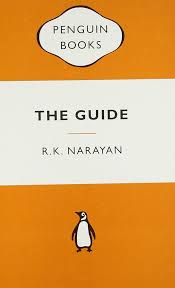
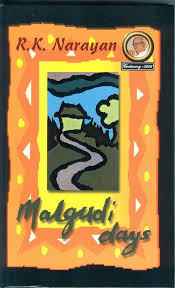
Start with the one Indian novel that is literally about a tour guide. The Guide by R.K. Narayan follows Raju, a railway-station guide in the invented town of Malgudi who talks his way into being a tourist expert, then a manager, then a convict, then a holy man, largely by never correcting anybody's assumption about him. It is the sharpest thing ever written about what tourists want a local to be. Malgudi Days is the same town in thirty-two short stories, each finishable on a bus leg, which makes it the better book to carry.
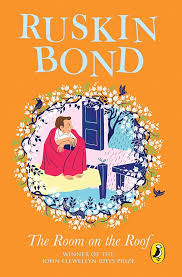
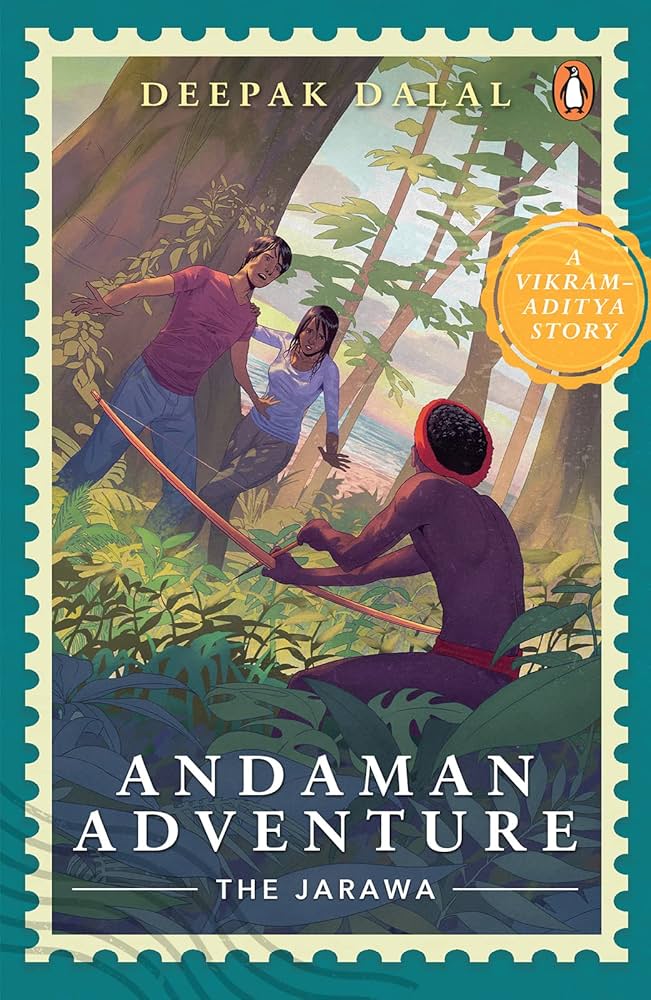
For the hills, The Room on the Roof by Ruskin Bond was written when he was seventeen and is still the most accurate account of Dehradun and the Mussoorie road in print: bazaars, monsoon, a boy escaping a guardian, and a landscape described by somebody who was not performing wonder at it. And if you are travelling with children, Andaman Adventure by Deepak Dalal does what almost no Indian children's book does, which is set a real adventure in a real Indian place with real geography, in this case the islands themselves. Hand it to a nine-year-old three weeks before a Port Blair flight and the trip changes character.
The Hindi shelf, where Indian road writing actually lives
Some of the most interesting writing about moving through India is in Hindi and rarely makes English travel lists. Ibne Batuta Ka Joota by Divya Prakash Dubey takes its title from the wandering fourteenth-century traveller Ibn Battuta and is a collection of short stories about contemporary Indians in transit between the lives they have and the ones they planned. Musafir Cafe by the same author is the novel-length version of that restlessness, about two people who keep choosing their own script over the one handed to them.
Banaras Talkies by Satya Vyas is set in the BHU hostels and is the funniest book on this list, and it will do more for a Varanasi trip than any curated walking tour, because it is about the city as a place people live badly and happily in rather than a place people photograph. All three are short, cheap, and read easily on a train.
East Asia, for the bookshop-and-cafe kind of trip
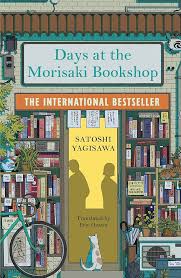
Tokyo's Jimbocho district is roughly a hundred and fifty secondhand bookshops in a few blocks, and Days at the Morisaki Bookshop by Satoshi Yagisawa is set in one of them. It is about a young woman who moves into the room above her uncle's shop after a breakup and slowly repairs. Under two hundred pages, and the best possible preparation for walking that neighbourhood. Its Korean counterpart is Welcome to the Hyunam-dong Bookshop by Hwang Bo-reum, set in a Seoul neighbourhood shop, and it is really a book about burnout and what a person does after quitting.
For Singapore, Crazy Rich Asians by Kevin Kwan is far more useful than its film reputation suggests. Strip out the comedy and it is a detailed map of a city's class geography and, more practically, its food: the hawker centres, the specific dishes, the order in which people eat them. It is a novel that doubles as a shopping list.
On the move: books built around the journey itself
There is a particular pleasure in reading a book about travelling while travelling, and Agatha Christie owns this category outright because she wrote it from the inside; she travelled the actual routes with her archaeologist husband. Murder on the Orient Express is a train stopped by snow in the Balkans with thirteen suspects in one carriage, and it is the ideal overnight-train book for the obvious reason. Death on the Nile is the same trick on a steamer between Aswan and Abu Simbel, and the Egypt in it is described by someone who had been there in the heat.
For the journey as metaphor, The Alchemist by Paulo Coelho is the shortest and most-gifted version: a shepherd crosses from Andalusia into the Egyptian desert chasing a recurring dream. It is the book to give someone who is about to take a trip they are nervous about. For the journey as reportage, Investment Biker by Jim Rogers is a genuinely odd and genuinely good travel book: an investor rides a motorcycle across six continents in the early nineties and writes about borders, currencies, black markets and bad roads with an eye no ordinary travel writer has.
And for anyone travelling with a reluctant reader, the Tintin Set by Hergé remains the most efficient travel-adventure format ever devised. Peru, Tibet, Scotland, the Congo, the Moon. A child who will not sit still for a chapter book will sit still for these, and the panels survive being read on a moving vehicle in bad light.
When the trip is not happening
Most years, for most people, the trip does not happen. Leave does not come through, the fare doubles, someone gets ill. The book for that situation is A Gentleman in Moscow by Amor Towles, in which a Russian count is sentenced in 1922 to permanent house arrest in a Moscow hotel and spends thirty years there. It is four hundred and eighty pages about a man who cannot leave one building, and it is the most convincing argument in modern fiction that attention, not distance, is what makes a place interesting. Read it and your own city gets slightly larger.
How to pack books for a trip, practically
- One book per leg, not one book per trip. Most people overestimate reading time on the road and underestimate it in waiting rooms. Two paperbacks for a week is usually right.
- Short-story collections and linked vignettes beat long novels on the move, because travel reading is interrupted reading. Malgudi Days and Ibne Batuta Ka Joota exist for exactly this.
- Pick one book about where you are going and one book about nothing to do with it. The second one is what you will actually read on the flight back, when you are too tired for a new place.
- Paperbacks over hardbacks, always. Weight matters more than you think at the end of day four, and a paperback you can bend open one-handed is worth more than a handsome edition you are protecting.
- Read the place book before you go, not during. A prior only works if you arrive with it. Carry the fiction; front-load the context.
- Order two weeks ahead. Books from ₹1 with free delivery across India is a good deal, but it is not an overnight one, and the week before a trip is the worst week to be waiting for a parcel.
The part of travel that is really a decision problem
There is a reason people come back from a trip having decided something. Travel removes the usual inputs, and a head with fewer inputs sorts itself. That is also the entire subject of The Art of Clarity by Murthy Thevar, which is about the ordinary discipline of separating what you actually think from the noise around it. It is a good book to carry on a solo trip, for the plain reason that it asks questions and then leaves you alone with them, which is roughly what a long bus journey does anyway.
The traveller sees what he sees. The tourist sees what he has come to see. The difference is entirely a matter of what was read first.
Building a travel shelf without overspending
The 2026 theme is right that AI is about to absorb most of the friction in travel, and good riddance to most of it. But the friction was never the point, and removing it does not by itself make anyone a better traveller. What makes the difference is arriving somewhere already curious about a specific thing, and that has only ever come from one place. World Tourism Day is on Sunday. The reading can start today.