On 7 January 2023, two people sat down under a peepal tree in Cubbon Park, Bengaluru, and read their own books in silence for a couple of hours. That was the entire event. Shruti Sah and Harsh Snehanshu had been cycling to the park on Saturdays for a few weeks already, and had started posting about it on Instagram; the account they made for it, Cubbon Reads, was less an organisation than a place to say we will be here again next week.
Three and a half years later, silent reading groups modelled on that format run in over 100 cities in India and abroad — Bandra Reads, Powai Reads, Delhi Reads, Pune Reads, and dozens more that never make it into a news story. No membership. No registration. Often not even a WhatsApp group. You turn up on a Sunday morning with a book, sit on the grass, and read.
It is worth asking why this particular, almost aggressively unremarkable idea has spread so far, and what it tells the rest of us about our own reading.
What Actually Happens at a Silent Reading Session
For anyone who has never been, the mechanics are simpler than the name suggests, and almost every group runs on the same unwritten rules:
- Same time, same place, every week. Usually Saturday or Sunday morning, in a public park. Groups announce the spot on Instagram and nowhere else.
- Bring your own book. There is no book of the month, no assigned reading, no one checking what you brought. Kindles and library copies count.
- Read for two to three hours. People drift in and out. Arriving late is normal and nobody registers it.
- No talking during the session. Phones stay face-down or away entirely. This is the only rule anyone enforces, and it is enforced by example rather than by anyone speaking up.
- Conversation comes at the end. Many groups stack the books for a group photo, exchange a few words, and then most people simply go home. A handful head to a café.
- Free. No fee, no brand sponsor, no commercial tie-in in most cases.
A silent reading group is not a book club
Why Silence Works Better Than Discussion
The founders of Cubbon Reads have a line about this that is hard to improve on: when two runners meet, they run together; when two musicians meet, they jam. Only readers, on meeting, were expected to stop reading and talk about reading instead. The silent format removes what they call the needless intellectualisation around books and puts the focus back on the one thing every reader has in common — the act itself.
Reading is such a solitary activity. What is great about a group like this is that it offers a sense of community. Also, when somebody is going through a reading slump, being part of such a group helps you get out of it. — Ananya Bhardwaj, who started Powai Reads in 2023 after being inspired by Cubbon Reads
There is a second, less romantic reason these groups work: they solve an attention problem that most Indian readers now have and few will admit to. The book is not boring. The problem is that at home, a chapter is interrupted four times — by a delivery call, by a work message, by the reflex to check a phone that has not even buzzed. A park bench with fifteen strangers who are visibly not looking at their phones is a surprisingly effective commitment device.
The wider mood has shifted in the same direction. In August 2026, the Gautam Buddh Nagar administration directed all schools in Noida and Greater Noida to cap daily smart-board screen time at 30 minutes for primary and 60 minutes for upper-primary classes, after parents complained that children were spending four to five hours a day in front of digital boards. The same order asked schools to introduce digital-free periods and digital zero days, and to promote reading and physical activity in their place. Uttar Pradesh separately mandated ten minutes of daily newspaper reading in school assemblies. The adults sitting under trees on Sunday mornings are running the same experiment on themselves, voluntarily.
What to Bring: Books That Survive a Two-Hour Park Sit
This is the practical question, and the one people get wrong on their first visit. A silent reading session is not a library carrel. There is sunlight, there is a fair amount of ambient noise, there are joggers and dogs and someone's Bluetooth speaker two hundred metres away. The books that work are the ones that pull hard enough to hold you through all of that. The books that fail are usually the ones you brought to impress yourself.
Short chapters and a fast hook, for a first session
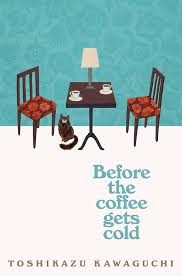
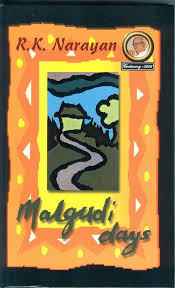
If you have not read seriously in months, do not start with the eight-hundred-page one. Start with something built to be finished. Before the Coffee Gets Cold is four self-contained stories in a Tokyo café and is close to ideal for a first outing — you can read one complete story in a single session and walk away feeling like something happened. Malgudi Days works the same way for readers who want R.K. Narayan's south India rather than someone else's: each piece stands alone, each is short, and none of them punish you for looking up.
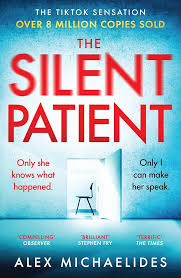
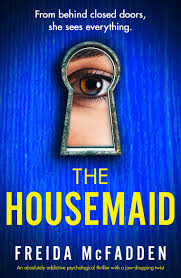
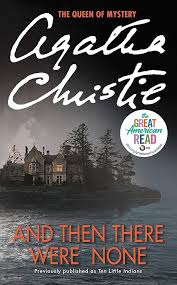
For readers who need pace rather than brevity, thrillers do the heavy lifting. The Silent Patient and The Housemaid are both engineered to make the next chapter feel compulsory, and And Then There Were None remains the cleanest demonstration of the form ever written. If your last three attempts at reading ended at page 40, this is the shelf to raid.
Literary fiction that rewards an uninterrupted stretch
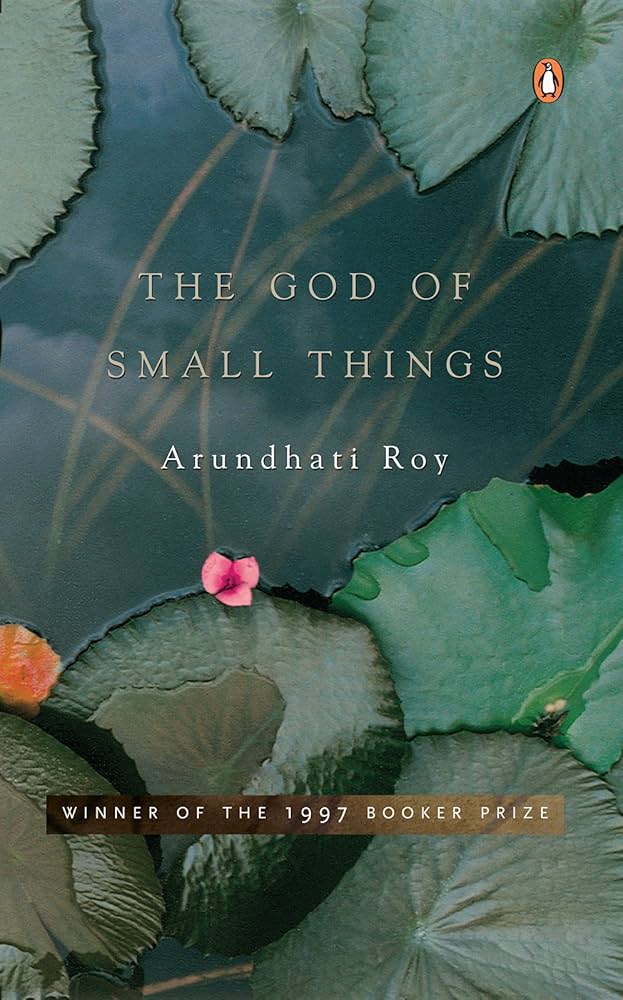
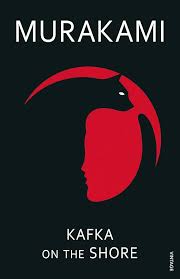
Once you have proved to yourself that you can sit for two hours, the format starts to pay off in a different way — it gives you the long, unbroken run that dense prose genuinely requires. The God of Small Things is a book most people abandon in ten-minute bursts and finish easily in ninety-minute ones, because Arundhati Roy's sentences need momentum. Kafka on the Shore has the same property for different reasons. Normal People and The Midnight Library sit in between: readable enough for a distracted afternoon, substantial enough to still be with you on Monday.
Readers who want something rooted closer to home tend to reach for The Palace of Illusions, Chitra Banerjee Divakaruni's retelling of the Mahabharata from Draupadi's point of view — familiar enough that you never lose the thread in a noisy park, unfamiliar enough in its angle that you keep turning pages.
Non-fiction for readers who fidget
Non-fiction is riskier in a park because there is no plot pulling you forward, so pick titles with short, self-contained units. The Art of Clarity by Murthy Thevar is built around exactly this problem — thinking clearly when your attention is being pulled in six directions — and its chapters are short enough to finish one, look up at the trees, and start another. Meditations is the two-thousand-year-old version of the same idea and can be opened anywhere.
For the attention question specifically, Deep Work and Dopamine Detox are the obvious pair, and there is something quietly funny about reading either of them in a group that has already solved the problem in practice. Atomic Habits is the most-carried non-fiction book at these sessions by a wide margin, which makes sense: a weekly reading ritual is a habit, and this is the book about how those get built. The Psychology of Money is another good park book for the same structural reason — twenty short chapters, each a complete argument.
How to Start One in Your Own City
If there is no group where you live, the barrier to starting one is close to zero. Almost every group that exists today began this way:
- Pick a park and a fixed slot. Saturday or Sunday, 9 AM to 11 AM works well across most Indian cities — before the heat, after the walkers thin out. Consistency matters far more than the choice of day.
- Go alone for three weeks anyway. Sah and Snehanshu read by themselves for weeks before anyone joined. The first session of Cubbon Reads had two attendees. Treat low turnout as the normal early state, not as failure.
- Make one Instagram account and post the location weekly. That is the entire infrastructure. Resist the urge to build a WhatsApp group; groups that stay lightweight last longer.
- Keep the rules to one line. Bring a book, read in silence, talk afterwards. Every additional rule costs you attendees.
- Expect friction, and be polite about it. Park authorities and other regulars will occasionally object. Cubbon Reads has been told it was damaging the grass, and once had books confiscated by guards who suspected an unauthorised gathering. Most of it resolves with a conversation.
- Do not monetise it. The reason these groups feel different from everything else on your calendar is that nobody is selling anything.
One footnote on how far this has travelled: after noticing that some regulars had started showing up in pairs, the Cubbon Reads founders launched a dating app called Bookmark, where profile photos stay hidden and people match on reading prompts instead. Silence, apparently, turned out to be a reasonable basis for conversation.
Building a park-reading stack on a budget
The most common report from first-timers is not that they made friends or discovered a new author. It is that they read more in one morning than they had in the previous month, and were surprised by how little effort it took. That is the whole proposition. The community is real, but it is a side effect. What you are actually buying, for the price of a Sunday morning, is two hours in which nothing is allowed to interrupt you.