National Dictionary Day is observed in the United States on 16 October, the birthday of Noah Webster, often called the father of the American dictionary. Webster published A Compendious Dictionary of the English Language in 1806 and then An American Dictionary of the English Language in 1828, which carried about 70,000 entries. Long before that, Robert Cawdrey's A Table Alphabeticall (1604) is described as the first single-language English dictionary, with roughly 3,000 words.
The day is American in origin, but the habit it celebrates travels well. Indian readers move between English, Hindi and regional languages every day, and a stronger vocabulary helps with exams, interviews, emails and plain, confident conversation. This list pairs vocabulary builders with books on clear thinking and great prose, so you grow your word bank and learn when not to use it. Every title is at TheBookX, with books from ₹1, free delivery and Cash on Delivery across India.
Quick facts
Start with a dedicated vocabulary builder
Word Power Made Easy by Norman Lewis is a long-time favourite with competitive-exam and MBA aspirants. It teaches words in related clusters, through roots and short exercises, rather than as a dry list to memorise. Fifteen minutes a day is enough to see progress within a few weeks.
A dictionary only helps if you meet words in context, which is why reading widely matters. How to Read a Book by Mortimer Adler and Charles Van Doren shows how to read actively, mark what you do not understand and look it up. Keep a notebook beside you and write down each new word with the sentence where you found it.
Learn from writers who respect the reader
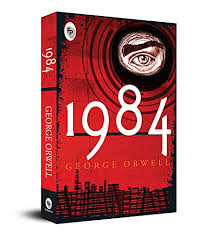
George Orwell argued that political language is often designed to hide meaning, and his fiction shows it in action. 1984 gave us Newspeak, a language shrunk on purpose to limit thought, and Animal Farm shows how slogans can bend the truth. Both are short, sharp reads that make you notice the words around you.
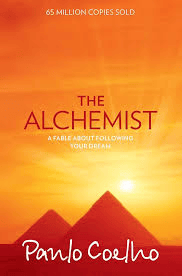
For lightness and craft, The Alchemist by Paulo Coelho uses plain, simple sentences to carry a big idea, proof that a small vocabulary used well can move millions. Malgudi Days by R.K. Narayan does the same in an Indian setting, with gentle, precise English that never shows off.
A large vocabulary is a tool, not a trophy. The goal is the right word for the moment, not the longest one.
Words are also about clear thinking
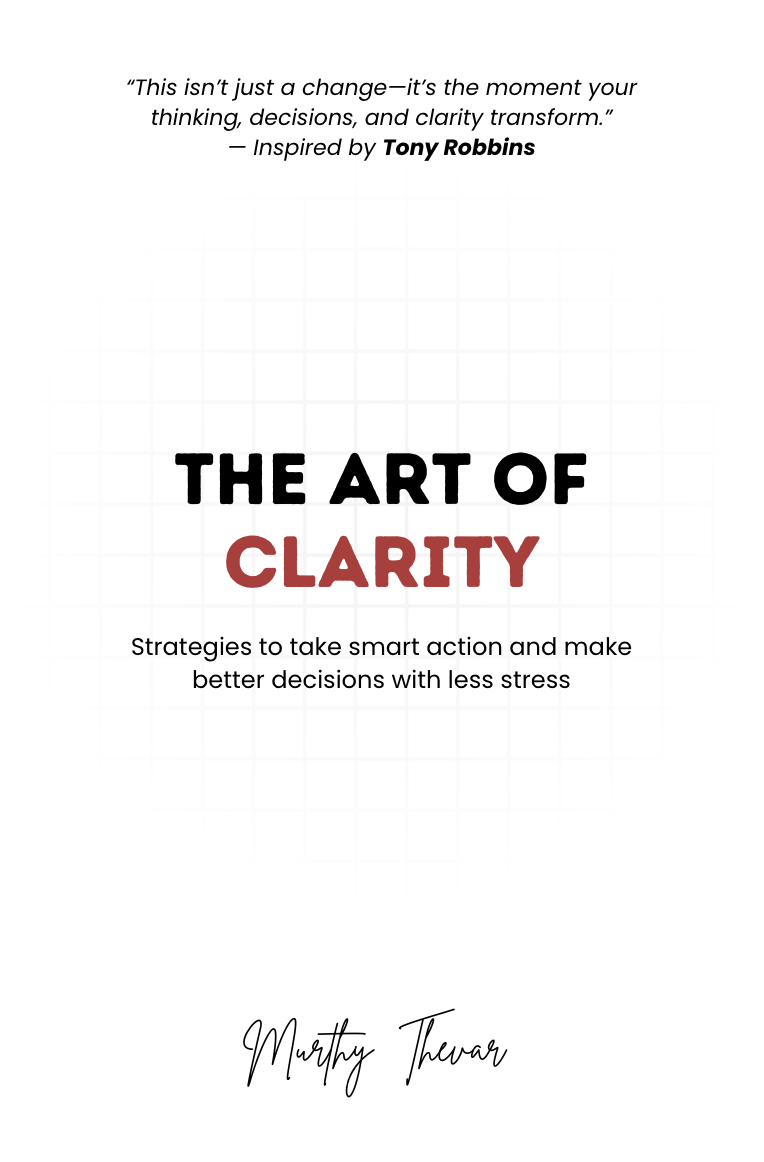
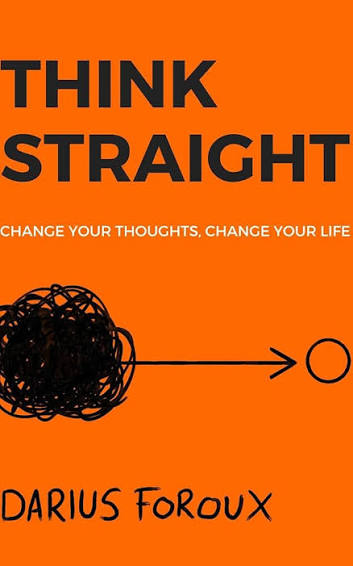
Clear writing starts with clear thinking. The Art of Clarity by Murthy Thevar is about cutting through mental clutter to decide, speak and write with purpose. It pairs naturally with Think Straight, which looks at how to change your thinking habits, and Man's Search for Meaning by Viktor Frankl, a book where every sentence earns its place.
If speaking is your weak spot, Think Faster, Talk Smarter offers practical ways to organise your thoughts under pressure, and How to Win Friends and Influence People by Dale Carnegie remains a classic on how the words you choose shape relationships.
A simple 30-day word habit
- Pick one book from this list and read 15 to 20 pages every day.
- Note down three unfamiliar words a day with the sentence they appeared in.
- Look up each word, then write one sentence of your own using it.
- Use one new word in a message or conversation each day, and review the list every Sunday.
- Pair the routine with a habit tracker approach from Atomic Habits by James Clear so it sticks.
Stories that celebrate words and reading
How I Taught My Grandmother to Read by Sudha Murty is a warm collection that reminds us how powerful it is to learn to read at any age. Days at the Morisaki Bookshop by Satoshi Yagisawa is a cosy novel about a young woman who finds comfort among old books, ideal for a quiet weekend. And for a thoughtful look at what words can do to the mind, The Kite Runner by Khaled Hosseini shows how a single sentence, spoken or left unsaid, can shape a whole life.