Between October and December this year, three of the most-anticipated films of the decade open in Indian cinemas, and every one of them is a book first. Verity arrives on 2 October. The Hunger Games: Sunrise on the Reaping follows on 20 November. Dune: Part Three closes the year on 18 December. If you have ever walked out of a theatre and thought I should have read it first, you have roughly ten weeks of runway and this is the window to use it.
This is not a trivial preference. Reading the book first changes what the film is for. You stop watching to find out what happens and start watching to see what a director chose to keep — which is a more interesting film, and a considerably better use of a ticket price. It also, in almost every case, spoils the book less than the trailer already has.
Why Adaptation Season Sends Old Books Back Up the Charts
There is a well-documented pattern here that publishers now plan around. Books published six to ten years earlier have recorded sales increases of anywhere between 395% and 1,698% after going viral online, and film announcements act as the same kind of accelerant. The #BookTok tag alone passed 80 million posts globally by June 2026, and a large share of that attention flows not to new releases but to backlist titles that suddenly have a trailer attached.
The practical consequence for a reader is timing. Paperback stock for an adapted title gets thin in the four to six weeks before release, and prices firm up as demand climbs. Buying eight weeks early is cheaper and less frustrating than buying eight days early. That is the entire logic of this list.
How to read the film's book in time, without cramming
2 October: Verity
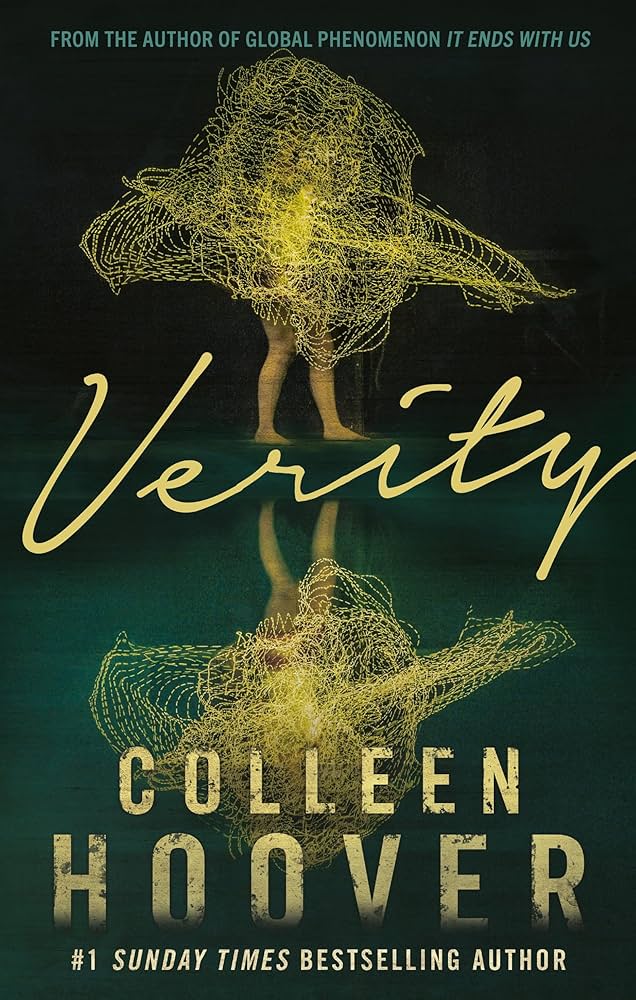
Verity is the first of the three and the easiest to finish in time. Michael Showalter directs, with Anne Hathaway as Verity Crawford, Dakota Johnson as Lowen Ashleigh and Josh Hartnett as Jeremy — a cast that suggests the film is being played as a straight psychological thriller rather than as romance.
The book is Colleen Hoover working well outside her usual register: a struggling writer is hired to finish a bestselling author's series, moves into her house, and finds an unpublished manuscript that reads like a confession. It is around 330 pages and most readers report finishing it in two or three sittings, which makes it the rare adaptation you can genuinely start in late September and still beat the credits. Readers who arrive at it from Hoover's better-known romances should know it is a harder, colder book than It Ends with Us or its sequel It Starts with Us.
If you want the pattern rather than the single book, Reminders of Him was adapted earlier this year and released in March 2026, which makes the Hoover-to-screen pipeline unusually easy to study: read one, watch one, then read the next before its film lands.
20 November: The Hunger Games — Sunrise on the Reaping
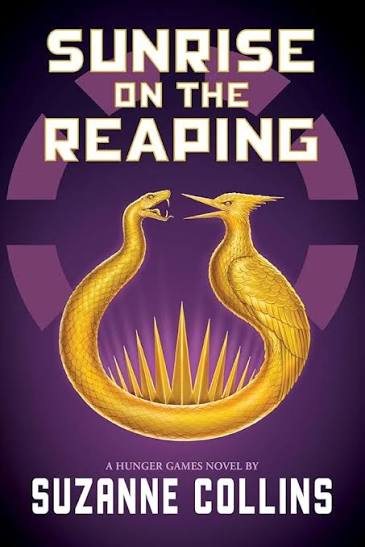
This is the big one, and the one most worth preparing for. Sunrise on the Reaping is set 24 years before Katniss Everdeen's story and opens on the morning of the reaping for the 50th Hunger Games — the Quarter Quell that a teenage Haymitch Abernathy is sent into. Francis Lawrence, who directed four of the previous films, returns. Joseph Zada plays young Haymitch, with Elle Fanning, McKenna Grace, Jesse Plemons, Ralph Fiennes and Glenn Close in the ensemble, and Jennifer Lawrence and Josh Hutcherson reprising Katniss and Peeta.
Suzanne Collins wrote this book to be read by people who already know how Haymitch ends up, and the dramatic irony is the point — you spend 380 pages watching a sharp, funny sixteen-year-old walk toward a version of himself you have already met. Reading it first is not optional if you want the film to land the way it is designed to.
The reading order, if you are starting from scratch
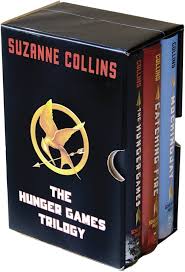
- Publication order is the right order. Start with the original trilogy — The Hunger Games Trilogy Set — because both prequels are built to be read by someone who already knows Panem's ending.
- Then the prequels, in the order they were written. The Ballad of Songbirds and Snakes first, then Sunrise on the Reaping.
- If you are short on time, read Sunrise on the Reaping alone. It stands up as a self-contained story. You will miss some resonance, not the plot.
- Do not start with the films. The trilogy runs about 1,150 pages total and reads fast; three weeks at 55 pages a day covers all of it comfortably before 20 November.
18 December: Dune — Part Three
Denis Villeneuve's third instalment adapts Dune Messiah and opens on 18 December 2026. This is the one where reading first pays the highest dividend, because Herbert's sequel is deliberately an anti-climax: it takes the messiah the first book built and dismantles him. Audiences who walk in expecting the scale and momentum of Part Two are going to be reading a very different film than the one Villeneuve made.
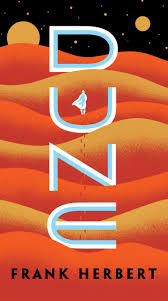
Start with Dune itself if you have only seen the films. It is the longest read on this list — roughly 700 pages, dense with invented vocabulary in the first hundred — and the standard advice holds: push through to the arrival on Arrakis and it stops feeling like homework. Four months is more than enough time; four days is not.
Books from ₹1, delivered across India
Coming Later: Books Worth Reading Well Before Their Films
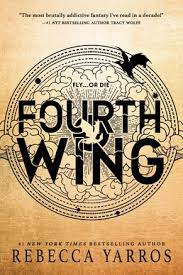
Two of the most-discussed adaptations in development have no release date yet, which is the best possible reason to read them without deadline pressure. Amazon's Prime Video has ordered Fourth Wing as a multi-season series — one book per season, with Meredith Averill as showrunner and Michael B. Jordan's Outlier Society producing. No filming date has been announced, so there is time to read it and its sequel Iron Flame properly rather than in a panic.
Netflix's The Seven Husbands of Evelyn Hugo, with Anna Kendrick directing, has been in development since 2022 and is unlikely to arrive before late 2027. Read it now and you will have forgotten enough by then for the film to still work.
It is also worth noting what already came and went this year. Emerald Fennell's Wuthering Heights, with Margot Robbie and Jacob Elordi, released on 13 February 2026 — and the reaction to it was a near-perfect demonstration of this article's argument. Viewers who had read Emily Brontë judged the film on its choices. Viewers who had not judged it on its plot, and were baffled.
If You Would Rather Read Something Nobody Is Filming
Adaptation season has an obvious downside: it narrows what everyone reads to the same six titles at the same time. If that holds no appeal, the counter-programming is strong right now. The Booker Prize 2026 shortlist is announced on 22 September and the winner on 9 November — a reading calendar with no film attached at all.
For fiction that stands entirely on its own, The Song of Achilles and Circe remain the best pair of mythological retellings in print, and Normal People is the rare book whose television version is genuinely good and still less interesting than the prose. Thriller readers who want the plot-twist hit without a release date to chase should take The Silent Patient or The Housemaid, both of which do in one weekend what a two-hour film cannot.
And if the real problem is not what to read but that you have not finished a book in six months, the honest answer is that the fix is not a better novel. The Art of Clarity by Murthy Thevar is about exactly that failure — attention that has been trained to fragment — and its chapters are short enough to rebuild the habit on. Atomic Habits covers the mechanics of making 20 pages a day stick, and The Psychology of Money is the non-fiction title most readers finish fastest. The Midnight Library works as a gentle re-entry point for anyone coming back after a long gap.
A film has two hours and has to choose. A book has four hundred pages and does not. Reading first is how you find out what the choosing cost.
Pick one. Not the whole list — one book, matched to the release date furthest away, at whatever daily page count you will actually keep. The reader who finishes Sunrise on the Reaping on 19 November has a better night at the cinema than the reader who bought all six of these in October and finished none.