In the last week of July 2026, a dystopian romance called Daggermouth did two things at once. It debuted at No. 1 on the New York Times hardcover fiction list, and it became the most publicly disputed book of the year — after a pre-print study flagged it as the highest-scoring popular title in a sample of more than 14,000 Kindle ebooks run through an AI-detection tool. The author, H.M. Wolfe, denies using generative AI to write it. Simon & Schuster, which reportedly paid seven figures for the book and its sequel, says it cleared the imprint's standard editorial process.
Whatever the truth of that particular case turns out to be, the reason it went so wide is that it landed on a nerve. Readers have started to suspect that some of what they are buying was not really written. This piece is not about one book. It is about how a reader can think clearly in a market where that suspicion is now reasonable — and what actually protects you.
What the Research Actually Says
The study behind the headlines examined 14,419 randomly selected self-published ebooks released between January 2023 and March 2026. Its findings are more interesting than the headline number:
- Books with substantial AI-generated text made up about 20% of the catalogue studied — but only 12.1% of sales and 11.3% of revenue. Machine-written books are over-represented on the shelf and under-represented in what people actually buy.
- The share of new Top 25 entries containing substantial AI text rose from close to zero in early 2023 to roughly 31% by 2026. The flood is reaching the charts, not just the long tail.
- The sales share held by books with no AI text at all fell from nearly 100% in early 2023 to around 60% by the second quarter of 2026.
- AI-heavy titles ran about 19% shorter, priced roughly a dollar lower, and averaged 26 reviews against 129 for human-written comparables.
Read those numbers carefully and a picture emerges that is neither apocalyptic nor reassuring. Machine-written books are numerous, cheap, thin, and mostly unread. The risk to a reader is not that literature is over. It is that finding a good book by browsing has become measurably harder, because the shelf is now padded.
On AI detectors — be sceptical in both directions
Eight Signals Worth Checking Before You Buy
None of these is conclusive on its own. Three or four together usually are. Work through them in order — the early ones take seconds.
- Read the acknowledgements first. This is the single best tell. A real author thanks specific people for specific things — an editor who cut a chapter, a friend who read a bad draft, a spouse who absorbed a year of it. Machine-assembled books have acknowledgements that could belong to any book.
- Look at the author's history. One title, published last month, no earlier work, no interviews, no traceable existence outside the retail page. Compare that to a writer with a decade of books behind them.
- Check the title against the pattern. Generated non-fiction clusters hard around Blueprint, Mastery, The Code, Secret Strategies, Ultimate Guide. Human-written books in the same space lean towards ordinary nouns and specific promises.
- Sample the rhythm. Use the preview and read two pages aloud in your head. Machine prose has a distinctive metronomic quality: sentences of near-identical length, paragraphs of near-identical shape, transitions that arrive exactly on schedule. Real writing varies because a person got tired, got excited, or changed their mind.
- Count the examples. Generated non-fiction is fluent about categories and vague about instances. It will tell you that great leaders communicate clearly; it will not tell you what a specific leader said in a specific meeting in 2011.
- Check the page count against the price. Very short at a suspiciously round price, in a category where established books run 250 pages, is a flag.
- Read the negative reviews, not the positive ones. Three-star reviews are where readers say things like "it repeats itself" or "nothing here I couldn't have guessed." That is the vocabulary of machine text.
- Look at the cover and the copyright page. Generated books tend to be generated end to end — the cover, the blurb and the front matter often carry the same thinness as the prose.
Where these signals break down
Two honest caveats. First, AI use in publishing is a spectrum, not a binary: a novelist using a model to tighten a paragraph is doing something quite different from a content farm generating 300 pages overnight, and no reader-side test separates them. Second, these signals are calibrated on self-published ebooks. They say very little about traditionally published books, which is exactly why the Daggermouth case unsettled people — it crossed the line from one world into the other.
The Simpler Defence: Read Books That Have Already Been Read
There is a strategy that costs no effort and requires no detector. Weight your reading towards books that have already survived contact with a large number of readers over a long period. Nothing generated in 2026 has that. A book with a decade of readers behind it has been checked by thousands of people who had no reason to be kind about it.
This is not an argument for reading only old books. It is an argument for making the backlist your default and the new release your deliberate choice — which happens to be the cheapest way to read well, since backlist paperbacks are the least expensive books in any catalogue.
Fiction that earned its readers
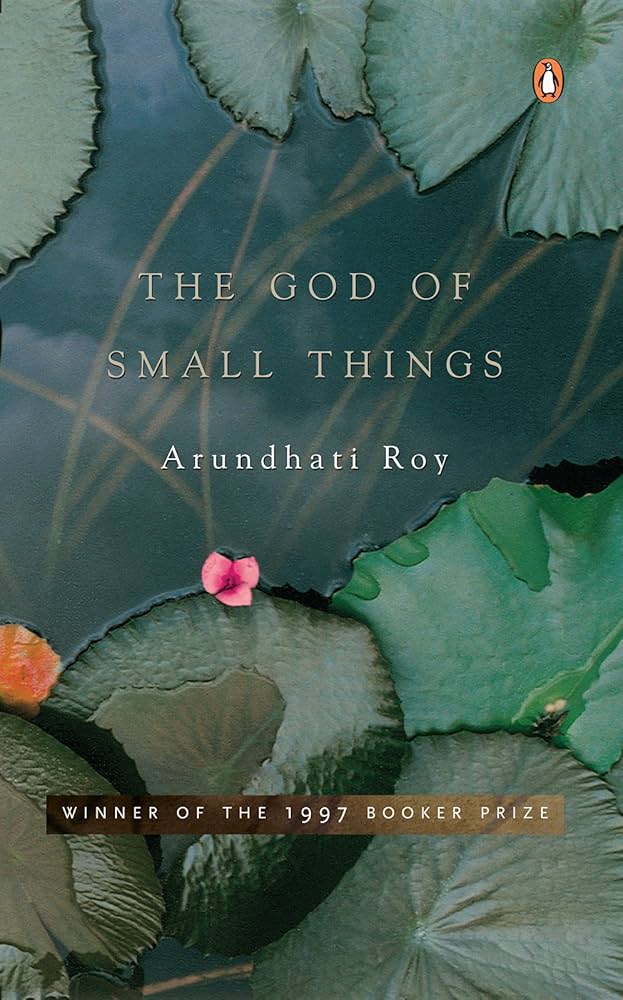
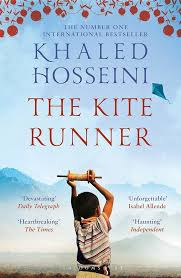
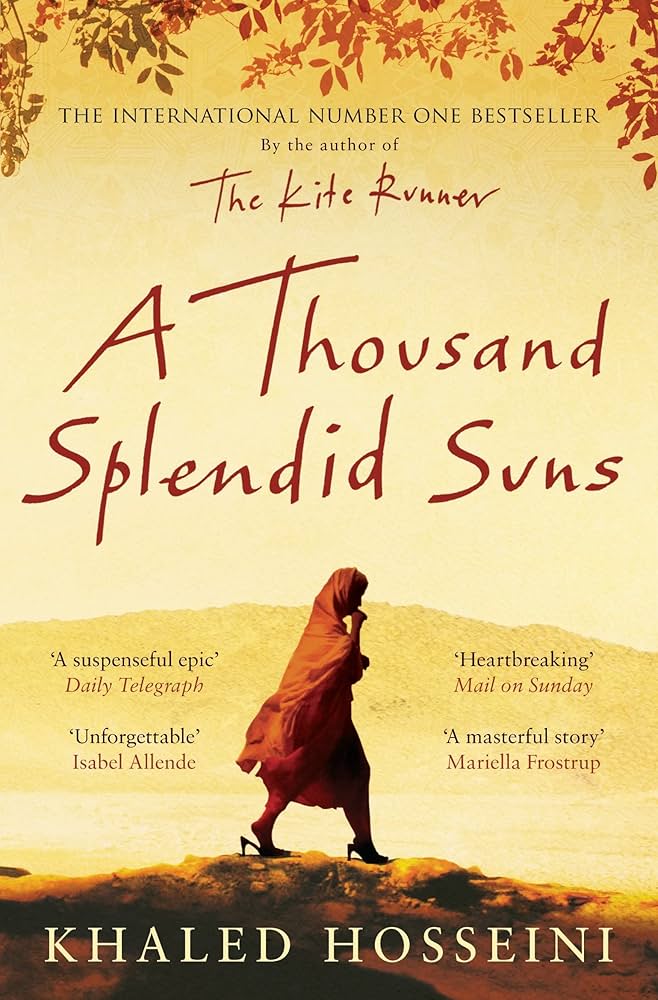
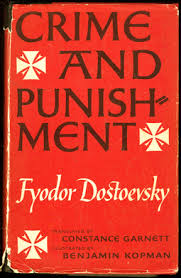
The God of Small Things is the obvious Indian starting point — Arundhati Roy's Booker winner, and a novel whose sentences could not have been produced by a system optimising for smoothness. The Kite Runner and A Thousand Splendid Suns remain the two Khaled Hosseini novels that readers hand to other readers unprompted. For something stranger, Kafka on the Shore is Murakami at his most unpredictable, and Crime and Punishment is still the best argument ever made that a novel can be an interrogation.
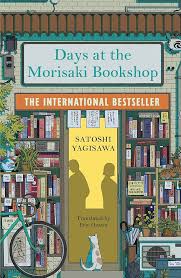
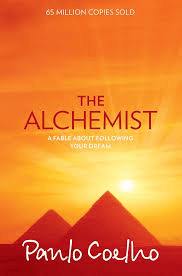
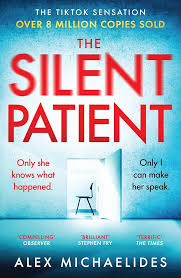
If you want fiction that is gentle rather than heavy, Days at the Morisaki Bookshop is a small Japanese novel about a second-hand bookshop that has quietly become a favourite among Indian readers, and The Alchemist is the book most people finish in a single sitting. On the thriller side, The Silent Patient is the modern benchmark for a twist that actually works. And The Palace of Illusions — the Mahabharata from Draupadi's point of view — is the retelling that made a generation of Indian readers rethink an epic they thought they knew.
Non-fiction that holds up under scrutiny
The genre most polluted by generated text is exactly the one most Indian readers buy from: self-improvement and business. The defence is to buy the small number of books in that space that are demonstrably the work of one mind. Thinking, Fast and Slow is Daniel Kahneman summarising four decades of his own research — the opposite of a book assembled from summaries. Atomic Habits and The Psychology of Money are the two most imitated non-fiction books of the decade, which makes reading the originals a reasonable act of self-defence.
The Almanack of Naval Ravikant works because it is compiled from a real person's actual words over a decade. Wise and Otherwise is Sudha Murty writing down fifty encounters she personally had while travelling across India — the most un-generatable book on this list, because its entire value is that she was there. The Let Them Theory is the recent bestseller in this category that has held its readers rather than its algorithm.
On the specific problem of thinking clearly in an environment engineered to muddle you, The Art of Clarity by Murthy Thevar is worth reading alongside this piece. Its argument is that clarity is not a talent but a practice of filtering — deciding what deserves your attention before the volume of available input decides for you. That is more or less the exact skill a 2026 reader needs at a bookshop.
The flood does not make good books worse. It makes finding them a skill — and a skill is something you can get better at.
How to build a backlist shelf cheaply
What This Is Really About
The uncomfortable part of the Daggermouth story is not the detection score. It is that a million readers enjoyed the book before anyone thought to ask the question. That suggests the thing readers value in a novel is not always the thing we say we value — and it is worth sitting with rather than dismissing.
But it cuts the other way too. If a machine can produce something readable, then readable stops being the standard, and the books that survive will be the ones doing something a system optimising for plausibility cannot do: being specific, being strange, being somebody's. That is a good filter. It was always a good filter. The flood has simply made it necessary to use it on purpose.