Gandhi Jayanti 2026 falls on Friday, 2 October, which makes it Mohandas Karamchand Gandhi's 157th birth anniversary and, this year, the start of a three-day weekend. It is one of only three national holidays in the Indian calendar alongside Republic Day and Independence Day, which means it is observed in every state without exception, and it is also the United Nations' International Day of Non-Violence, a designation the General Assembly adopted in June 2007 specifically because of the date.
The day usually gets handled the same way every year: a prayer meeting at Raj Ghat, a school assembly, a cleanliness drive, and a quotation posted somewhere. None of that is wrong, and all of it is forgettable by Monday. What is harder, and more in keeping with a man who read obsessively and changed his mind in public, is to spend part of a free Friday reading something that argues with you.
Gandhi Jayanti 2026, in one place
Start where Gandhi himself started
Gandhi's own account of his life, The Story of My Experiments with Truth, was written in Gujarati and serialised through the late 1920s, and it remains the obvious first stop; it has long been out of copyright and is easy to find in almost any edition. But the book he actually returned to for fifty years was a different one. He first read the Bhagavad Gita properly as a law student in London in 1888, in Edwin Arnold's English verse translation, and he later produced his own Gujarati rendering. He described it as the book he turned to when he was in doubt, which is a useful thing to know before reading it.
The Eknath Easwaran edition of The Bhagavad Gita is the version to pick if you have never got past the first chapter, because its introduction does the work of explaining why a conversation on a battlefield turns into an argument about duty and detachment. If there are children in the house, The Gita for Children by Roopa Pai is a genuinely good book rather than a simplified one, and it treats a ten-year-old as capable of handling a difficult idea. For the wider mythological context, Jaya by Devdutt Pattanaik places the Gita back inside the epic it was lifted out of.
Non-violence as a technique, not a temperament
The common misreading of Gandhi is that satyagraha was a personality trait, something available to unusually calm people. It was not. It was a method with rules: accept the consequences, do not hide, do not humiliate the opponent, and keep the cost visible. Books that show a person holding a position while the cost rises are therefore closer to the point than anything filed under inspiration.
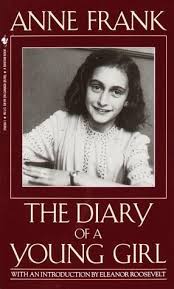
Man's Search for Meaning by Viktor Frankl is the shortest and most demanding of them. Frankl, a Viennese psychiatrist who survived the camps, argues that the last freedom available to a person is the choice of response, which is the same claim Gandhi made about the difference between submission and non-cooperation. The Diary of a Young Girl by Anne Frank is the same period seen from inside an annexe by a teenager who is not being noble about it, and that is precisely why it lands.
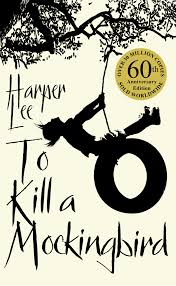
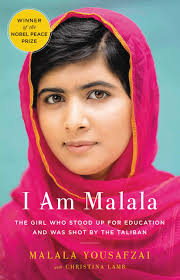
To Kill a Mockingbird by Harper Lee is the novel that has done the most, in the most countries, to explain to young readers what it looks like when one person's refusal is the only thing standing in a room. And I Am Malala by Malala Yousafzai is the living version: a girl who kept going to school, was shot for it, and then argued that the response should be more schools rather than revenge. Read alongside each other on the same afternoon, the fiction and the memoir do something neither does alone.
The books about what happens when the method fails
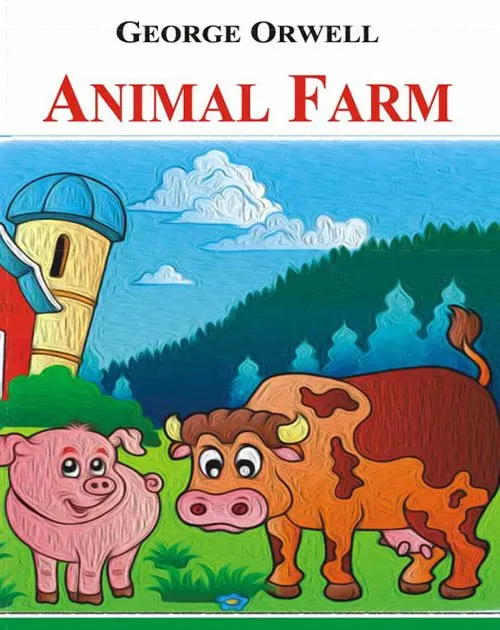
Gandhi Jayanti reading lists tend to be relentlessly uplifting, which is dishonest. The century Gandhi lived in was mostly a demonstration of the opposite case, and the two novels that describe it best are both short and both by the same author. Animal Farm by George Orwell is a hundred and twenty pages on how a liberation movement becomes the thing it replaced, and it is readable in a single sitting on a holiday morning. 1984 is the longer, colder companion, and its real subject is not surveillance but language: what happens to resistance when the words for it are removed.
Closer to home, The God of Small Things by Arundhati Roy, which won the Booker Prize in 1997, is the most widely read Indian novel in English of the last thirty years and is entirely about an unwritten rule, who is permitted to love whom, and what the enforcement of that rule costs a family in Kerala. It is not a book about Gandhi. It is a book about the India that his generation handed over, which is a more uncomfortable and more useful thing to read on 2 October.
Indian lives worth reading on 2 October
Wings of Fire by A.P.J. Abdul Kalam is the obvious national-holiday book and it earns the position: a newspaper boy from Rameswaram who ends up running India's missile programme, written without self-congratulation. Its follow-up, Ignited Minds, is addressed directly to students and is the better of the two to give a teenager this week.
Sudha Murty's essays occupy a space almost nobody else writes in, which is ordinary Indian ethical life at close range. Three Thousand Stitches opens with her work with devadasi women in north Karnataka and is the most Gandhian book on this list in method rather than subject: show up, stay long, be embarrassed, continue. Wise and Otherwise is the same voice across fifty short pieces, and How I Taught My Grandmother to Read is the one to read aloud to a child, since the title story is about a sixty-two-year-old woman deciding she will learn the alphabet after all.
Power, described by people who held it
Gandhi's insight about power was that it is borrowed, and that it stops working the moment enough people decline to lend it. The two modern political memoirs worth putting next to that idea are A Promised Land by Barack Obama, who has said more than once that Gandhi is the figure from history he would most like to have dined with, and Becoming by Michelle Obama, which is the more candid of the pair about what proximity to power actually costs a family. Neither is a hagiography, and both are long enough to justify a three-day weekend.
The inner discipline underneath all of it
Satyagraha was built on something unglamorous: a daily practice of self-restraint that Gandhi treated as training, in the way an athlete treats training. The closest Western equivalent in print is Meditations by Marcus Aurelius, which is not a book of advice but a private notebook written by a man reminding himself of things he kept forgetting. The Obstacle Is the Way by Ryan Holiday is its modern translation into plain instructions, and it is the more practical starting point for most readers.
Two others fit the same shelf. The Courage to Be Disliked by Ichiro Kishimi and Fumitake Koga is a dialogue about separating your tasks from other people's opinions, which is the psychological core of civil disobedience stated in ordinary language. The Forty Rules of Love by Elif Shafak comes at the same territory from the Sufi tradition, and is the gentler of the two if the day is meant to be restful rather than strenuous.
A holiday named after a man who read the Gita, Thoreau, Ruskin and Tolstoy and then changed his life because of them is best kept by reading something, not by quoting him.
How to actually use the long weekend for reading
- Pick one short book and one long one. Friday is for something you can finish, like Animal Farm or Man's Search for Meaning. Saturday and Sunday are for the four-hundred-page memoir you have been postponing.
- Read one book you expect to disagree with. Gandhi's method depended on taking the opponent's position seriously enough to state it fairly, and a reading list that only flatters you is a waste of a free day.
- Read one thing aloud. If there are children at home, How I Taught My Grandmother to Read or The Gita for Children works better spoken than silently, and it turns the holiday into something shared.
- Do not try to finish four books. Two is a realistic holiday total for most people, and three only if one of them is short. An abandoned pile is worse than a completed pair.
- Order now, not on 1 October. Books start from ₹1 at TheBookX with free delivery across India, but a parcel still needs days, and the whole point of a Friday holiday is having the book already in the house.
- Put the phone in another room for the first hour. Everything else on this list fails without it, which is the least profound and most load-bearing item here.
There is one more thread running through all of this that is easy to miss. Gandhi's real skill was not endurance; it was clarity. He could state what he wanted in one sentence, which is why the salt march worked as an argument and not merely as a protest. That habit, separating what you actually think from the noise around it, is the entire subject of The Art of Clarity by Murthy Thevar, and it is a reasonable thing to read on a day off when the noise is temporarily switched off anyway.
Building the Gandhi Jayanti shelf without overspending
The reason 2 October became an international observance rather than a purely Indian one is that the method travelled: to Montgomery, to Johannesburg, to Warsaw, to Manila. Whether it still works is a live question and a fair one to argue about. But the argument is only worth having if you have read something, and there are seven days left before the holiday. That is enough time for a parcel and a decision.