Four years ago this week, on 1 September 2022, Mary Roy died in Kottayam. She was an educator who founded a school called Pallikoodam, and a litigant who in 1986 persuaded the Supreme Court of India to strike down the Travancore Christian Succession Act of 1916 - a law under which a daughter inherited a token sum, once as little as ₹5, while sons took the estate. The judgment in Mary Roy v State of Kerala gave Syrian Christian women in Kerala equal inheritance rights under the Indian Succession Act. It is the kind of life that usually ends up in a respectful obituary and then a footnote.
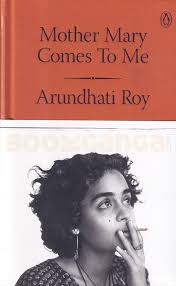
Instead, a year ago this week, her daughter published a book about her. Mother Mary Comes to Me came out in September 2025, Arundhati Roy's first memoir, written after her mother's death and unsparing about a woman who was a public champion of women's rights and, at home, frequently cruel to her own children. It has been the most argued-about Indian book of the last twelve months, and it did something quietly significant to the Indian non-fiction shelf: it made memoir respectable as literature rather than as celebrity content.
Which is worth pausing on, because the memoir shelf in India has been growing for a while and nobody has been paying it much attention.
Why memoir is having a moment
What Memoir Actually Does That Fiction Cannot
The standard defence of memoir is that it is true, and that is the weakest possible argument for it. Plenty of memoir is unreliable, and every good memoirist admits as much on the page. The real case is narrower and more useful.
A memoir gives you the inside of a decision. Not what someone did, which a biography or a Wikipedia page will tell you faster, but what the choice felt like from the inside while it was still reversible. Fiction can simulate this beautifully, but you always know the author arranged the outcome. In memoir, the outcome arranged the author. That asymmetry is the entire value.
It also gives you a specific kind of permission. Reading someone describe a family they could not fix, an ambition that took twenty years, or a grief they handled badly is the closest most of us get to being told that our own version is not disqualifying. This is not therapy and a book is no substitute for talking to someone. But it is company, which is not nothing.
The practical consequence: memoir is the best genre to hand a reluctant reader. There is no world to learn, no cast to keep straight, and the stakes are legible from page one.
How to Read a Memoir Without Being Taken In
Memoir is the genre most easily mistaken for testimony, so it repays a bit of scepticism. Four habits worth having:
- Ask who is absent. Every memoir is a story told by one person about people who have not been asked. Notice whose version you are never given - the sibling, the ex-partner, the parent. The good memoirists name this problem themselves.
- Separate the account from the verdict. A memoirist can be entirely accurate about what happened and still wrong about what it meant. You are allowed to accept the first and argue with the second.
- Watch for the redemption bend. Publishing rewards arcs that resolve. When a book turns tidy in its last thirty pages, that is often the market talking, not the life.
- Read the acknowledgements and the dates. They tell you how long the book took, who read it, and what was going on around the author while she wrote. It is the cheapest context you will ever get.
Sixteen Memoirs Worth Your Time, By What You Want From One
There is no single memoir shelf, because people come to it for entirely different reasons. Sorted by what you are actually after.
If you want the year's literary argument
- Mother Mary Comes to Me by Arundhati Roy - a daughter fathoming a formidable, damaging mother, and the reason memoir is being taken seriously in India right now. Read it alongside her fiction rather than instead of it.
- The God of Small Things by Arundhati Roy - the 1997 Booker winner. Read after the memoir and the Kerala of the novel stops being a setting and starts being a floor plan.
- All the Way to the River by Elizabeth Gilbert - the other September 2025 memoir that split reviewers, on love, addiction and the death of her partner. Nonlinear, raw, closer to a journal than a book.
If you want an Indian life, told plainly
- Wings of Fire by A. P. J. Abdul Kalam - still the most-gifted memoir in the country, and the one that works on a fourteen-year-old and a forty-year-old for different reasons.
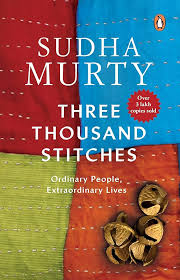
- Three Thousand Stitches by Sudha Murty - short true accounts from a life spent in development work. The best entry point on this list for someone who says they do not read.
- An Unsuitable Boy by Karan Johar - far more candid about failure, loneliness and the machinery of Hindi cinema than its reputation suggests.
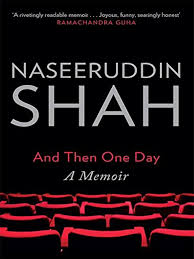
- And Then One Day by Naseeruddin Shah - the best-written actor's memoir in Indian English, and unusually hard on its own author.
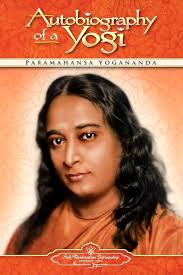
- Autobiography of a Yogi by Paramahansa Yogananda - read as spiritual instruction or as a strange and vivid travelogue of early twentieth-century India. Both readings hold.
If you want to think about mortality and meaning
- When Breath Becomes Air by Paul Kalanithi - a neurosurgeon writing while dying of lung cancer. Under 250 pages and the most exact book about time on this list.
- Man's Search for Meaning by Viktor Frankl - part concentration camp memoir, part psychiatric argument. The memoir half is what makes the argument land.
- The Diary of a Young Girl by Anne Frank - not a memoir by intention, which is precisely why it reads unlike anything constructed for publication.
If you want to know how someone built something
- Shoe Dog by Phil Knight - the Nike memoir, and the rare business book that is honest about how close the whole thing came to collapsing repeatedly.
- Becoming by Michelle Obama - strongest in its first third, on the South Side of Chicago, long before any of it was inevitable.
- I Am Malala by Malala Yousafzai - a memoir about the right to go to school, which lands differently in a country arguing about exactly that.
If you want to be less confused about your own head
- Everything I Know About Love by Dolly Alderton - twenties, friendship, and the slow discovery that the friendships were the love story. Very funny, then suddenly not.
- The Art of Clarity by Murthy Thevar - not a memoir but the natural next book after one, on thinking and speaking precisely instead of loudly. Read it when a memoir has left you with a lot of feeling and no vocabulary for it.
A Reading Order That Works
If you have never deliberately read a memoir, do not start with the 500-page literary one. Start with Three Thousand Stitches or Wings of Fire - both short, both structurally simple. Then move to When Breath Becomes Air, which is where most people discover the genre can do what novels do. Then Mother Mary Comes to Me, which asks something of you.
If you are already a fiction reader, invert it. Read the memoir of a novelist you admire and then reread one of their novels. The second reading is a different book. This is the single most rewarding thing you can do with a library card.
A biography tells you what a person did. A memoir tells you what it cost them, and lets you decide whether the price was worth paying.
What Is Coming Next
The memoir wave is not done. Shashi Tharoor's portrait of Sree Narayana Guru arrived in 2026 to reframe a reformer most non-Malayali readers know only as a name, and Indian publishers have signalled more politics, history and life-writing through the rest of the year. On the fiction side, the Booker Prize 2026 shortlist is announced on 22 September 2026 at the Southbank Centre in London, cut from a thirteen-book longlist released on 28 July, with the winner named on 9 November. The judging panel is chaired by the classicist Mary Beard.
Either way, September is a good month to buy books. Titles on TheBookX start from ₹1, delivery is free, and Cash on Delivery is available across India. Gift wrapping is ₹25 per book, which matters if you are handing someone a memoir - it is a genre people rarely buy for themselves and almost always finish when someone else picks it.
One last thing. Mary Roy spent decades being written about as a case citation. It took her daughter's memoir to make her a person on the page, complications included. That is what the genre is for, and it is why the shelf deserves more of your attention than it currently gets.